-

Grazing tolerant lucerne: proven in long-term trials

AlfaGen’s grazing-tolerant varieties are tested over five years to bring you the best in persistence, quality, and performance

persistent grazing tolerant lucerne

In this article

We take the term ‘grazing tolerant’ seriously. At AlfaGen Seeds new lucerne varieties are put through 5 years of repeated, controlled grazing to identify varieties that truly persist in Australian conditions, and continue to perform under heavy pressure.

Through our lucerne breeding program, more selections are made with grazing tolerance as a core trait – giving confidence new varieties will persist and perform in real grazing systems. This rigorous process separates short-term performers from lucerne bred to last.

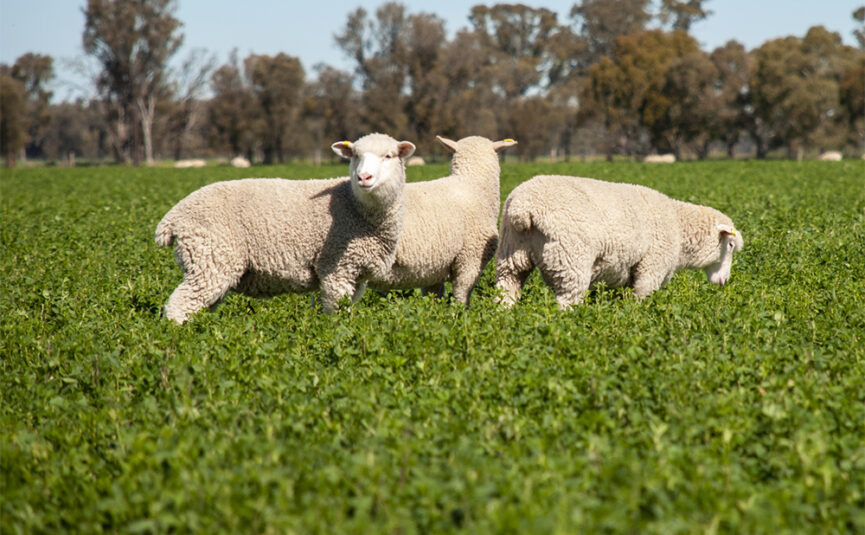
Developed in partnership with NSW DPI and IP Australia, the protocol measures true grazing tolerance by repeatedly grazing the lucerne under controlled conditions that reflect real on-farm pressure. After establishment, the lucerne was grazed about every three weeks (or as required) to a residual height of around 30mm. 

Approximately 20 merino wethers were used for each grazing event, enough to apply meaningful grazing pressure without set stocking. This number was enough to graze the lucerne within 3-4 days, allowing us to manage frequent grazing without exposing the lucerne to extended periods of set stocking. Over the 5-year period:

  • In the first 3 years, the trial was grazed 32 times
  • In the following 2 years, it was grazed 18 times

This level of grazing pressure goes well beyond a single season, helping separate short-term performers from varieties that can persist long term.
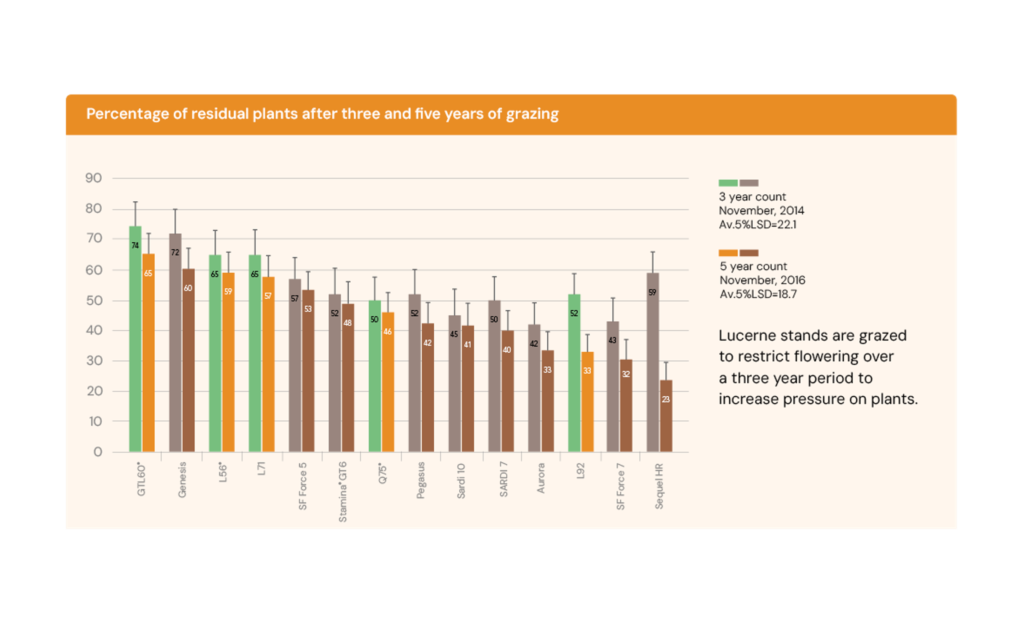
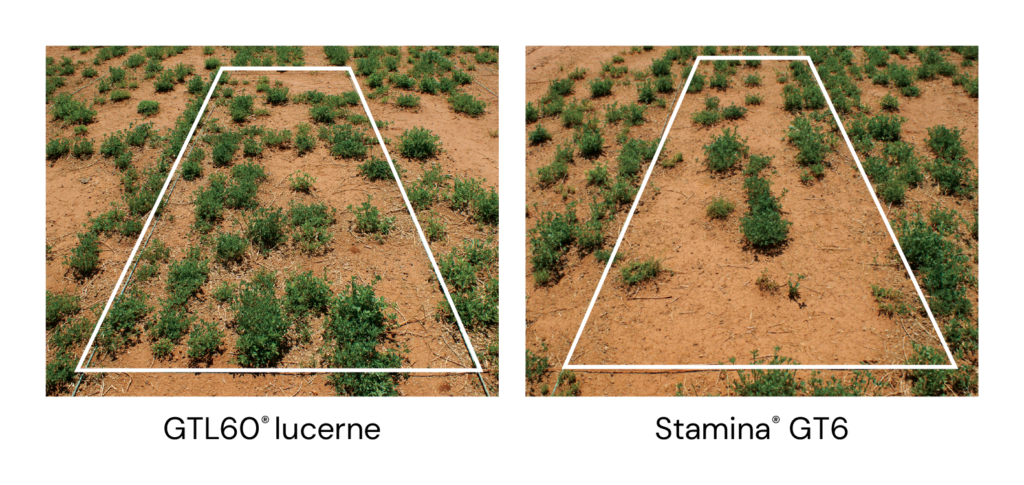
Plant counts were measured at establishment and throughout the trial to track persistence over time. The trial was established at a dryland sowing rate of 4kg/ha, resulting in an initial plant count of around 37 plants/m² – right within the target of 30–40 plants/m² for a 420mm rainfall environment.

What’s the verdict?

After 5 years of repeated grazing, clear differences emerged between varieties. Some highly winter active material performed very well early, but showed a noticeable decline in persistence in the final 2 years under continued grazing. This highlights the importance of long-term testing when selecting lucerne for grazing systems. These insights allow us to select varieties that actually deliver under sustained grazing pressure, not just in the early years.

Why long-term lucerne performance trials matter

Single-season lucerne performance trials can favour highly winter active lucerne that performs early. However, long-term lucerne grazing trials reveal which varieties maintain plant density and persistence under sustained pressure.

Our commitment to rigorous testing and ongoing improvement means you can trust AlfaGen lucerne for optimal performance, year after year.

GTL60® lucerne sets the standard for grazing tolerant varieties. Its outstanding tolerance allows for more frequent grazing rotations while maintaining excellent persistence.

Behind the trials

AlfaGen lucerne is backed by a global breeding program focused on persistence, forage quality and performance under real grazing pressure. Our varieties are developed and selected across multiple environments to ensure they perform where it counts, in paddocks, not just plots.

→ Explore our global lucerne breeding program

Looking for practical lucerne advice?

Lucerne rewards the growers who understand it. The Lucerne Advisor blog series brings together practical, on-farm guidance to help you plan, establish, manage, and get more value from your stand.

From soil preparation and first-season decisions, through to harvest timing, feed quality, and long-term persistence, the series focuses on the milestones that make the biggest difference.

→ Check out the lucerne advisor blog series

You might also like