-

How root systems influence forage crop resilience

When it comes to forage crop performance, a lot of the story is hidden underground. This article explores how root depth, structure and species traits influence pasture resilience, persistence and adaptability, and how to use that insight to make better paddock decisions.

In this article

It’s easy to focus on what you can see in a forage crop, growth rate, leafiness and dry matter yield—but what’s happening below the surface is just as critical to long-term paddock performance. Root depth and structure drive how well a pasture accesses moisture and nutrients, recovers from stress and persists through variable seasons —making them a practical starting point for improving paddock resilience. 

Why root systems matter in forage crop performance

Pasture root systems determine how deep a plant can reach, how widely it can spread through the soil profile, and how efficiently it can extract what it needs to grow.

Three key functions make root systems central to forage crop performance:

  • Accessing moisture – Deeper roots can reach moisture stored well below the surface, giving plants a buffer when surface soils dry out
  • Accessing nutrients – A well-developed root system explores more soil, improving a plant’s ability to take up nutrients like nitrogen and phosphorus that are essential for growth and quality
  • Supporting persistence – Strong root systems anchor plants and improve their ability to survive dry spells, recover from grazing and maintain production across seasons .

Paddock variation also plays a role. Soil type, depth, drainage and compaction all affect how roots develop and how far they can reach. In paddocks with challenging conditions, including shallow soils, hard pans or patchy moisture, root characteristics can have an outsized effect on which species establish well and which struggle.

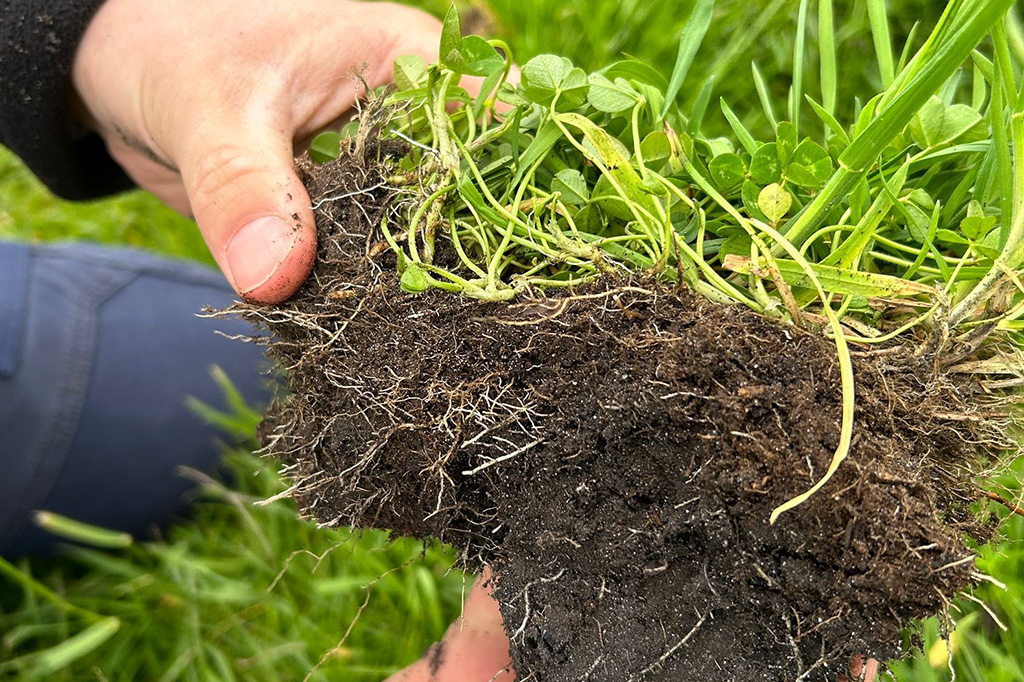
A close-up demonstrating clover roots pushing through thatchy soils

Shallow vs deep root systems in pastures

Not all forage crops develop their root systems in the same way. Understanding the differences between shallow and deep-rooted species helps you match the right plant to the right paddock.

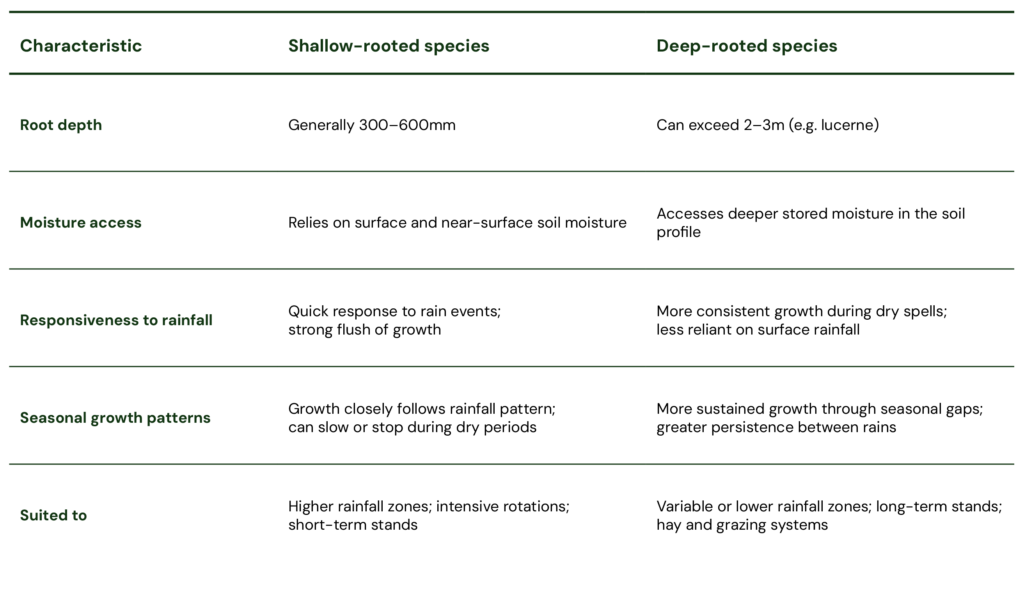
Shallow-rooted species, including many annual ryegrasses and some clovers, establish quickly and respond rapidly to rainfall. Their roots generally sit in the upper 300–600mm of the soil, making them highly responsive to surface moisture but more vulnerable when it dries out. 

Deep-rooted species explore further into the soil. Lucerne is a great example, with a taproot that can reach depths of 2–3m or more under the right conditions, giving it access to stored moisture that shallow-rooted species simply can’t reach.

It’s worth mentioning that ‘shallow’ doesn’t mean bad. Annual ryegrasses are among the highly productive because they suit the conditions they’re bred for. It’s about matching the root system to what your paddock actually needs, and managing accordingly. Shallow-rooted species are more sensitive to grazing pressure and traffic during key growth stages, so understanding what’s happening below the surface helps you make better decisions above it, when to rest, rotate stock, or keep machinery off.

Root systems and pasture drought resilience

When the rain stops, pasture performance is largely determined by what’s happening underground. 

Accessing stored soil moisture

As surface soils  dry out, shallow-rooted species can lose their primary water source and growth slows or stops. Deep-rooted species can continue drawing on moisture stored deeper in the profile, maintaining production for longer.

Lucerne is a strong example, using its deep taproot to maintain feed value through tough conditions—explored in more detail in our  Lucerne Advisor Series.

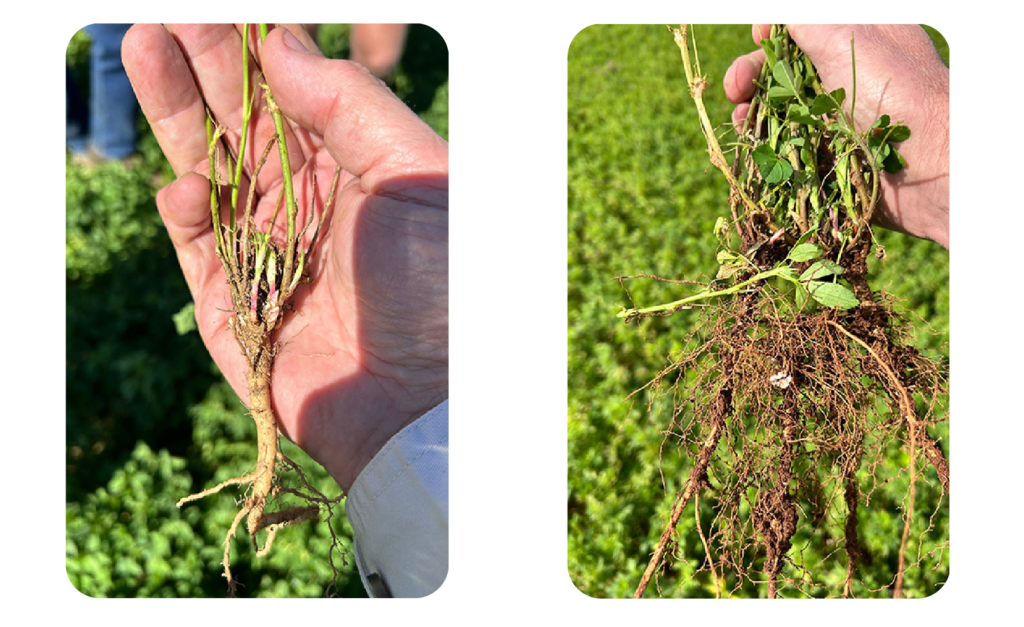
A comparison of lucerne roots at emergence vs 5 months post sowing

Survival during dry periods

Root depth also influences a plant’s ability to survive through extended dry spells. Plants that can continue accessing moisture, even at low levels, are more likely to persist, while shallow-rooted species tend to stress or die back faster once surface moisture is exhausted , meaning paddock recovery takes longer.

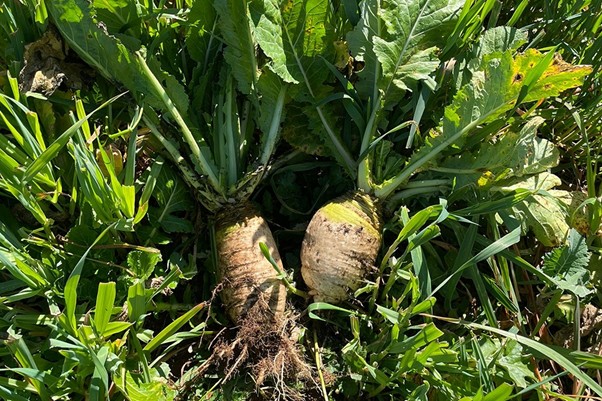
This is something we see clearly in our trial work, including Subzero hybrid forage brassica case study from the Southern Downs, where deep taproot brassicas were used to push through drought and weed pressure. 


Recovery after seasonal stress

Root systems don’t just support survival, they set up recovery. Plants with deeper, intact roots  have more energy reserves and better access to nutrients when rainfall returns. This allows for faster regrowth and a quicker return to productive grazing or cutting.

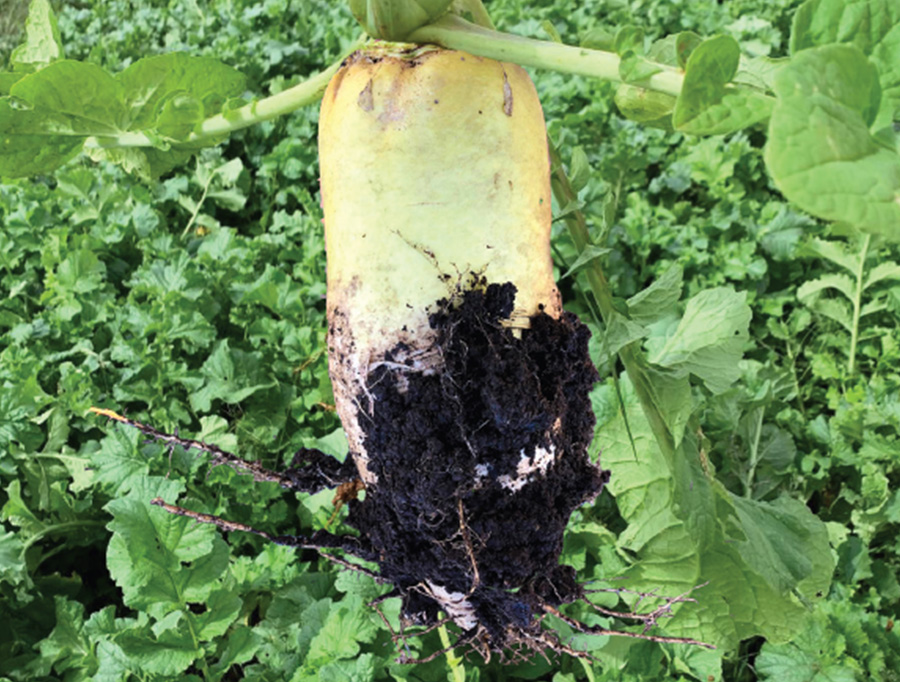
In paddocks where compaction has restricted root depth, a renovation phase with a deep-rooted herb like Smart Radish® can help reopen the soil profile and improve water movement, setting up better performance in following pastures. 

In short: more root depth, more options when the season turns dry.

AlfaGen Seeds Smart Radish® has a strong taproot with lateral roots that explore horizontal fissures and scavenge nutrients efficiently.

Matching root systems to your paddock

Understanding root systems is only useful if it informs decisions on-farm. 

Soil type and depth

Deep, well-structured soils allow roots to fully develop, making deep-rooted perennials like lucerne a strong fit. In contrast, shallow, rocky or compacted soils will limit root depth regardless of species, so it’s important to match expectations to paddock conditions. Where compaction is an issue, species like Smart Radish® can help open the soil profile ahead of future pasture establishment. 

Rainfall patterns

In paddocks with regular dry periods between rainfall events, deep-rooted species can help bridge those gaps. In higher, more reliable rainfall zones, fast-establishing shallow-rooted species like ryegrass can perform well and are often simpler to manage.

Paddock use

For long-term grazing or hay systems deep-rooted perennials like lucerne offer greater persistence. For short-term rotations or finishing systems, fast-establishing species like annual ryegrass or forage cereals may be a better fit.

Even the best lucerne stand has a natural end point, so planning what comes next is part of managing the system well—covered in our article on lucerne in rotation.

AlfaGen Seeds offers a range of species and varieties across these systems, from lucerne suited to different environments through to grasses, legumes and herbs for both short and long-term pastures.


Root system of AlfaGen Seeds Bouncer hybrid forage brassica

Getting the best from your paddock starts below the surface

Root systems are easy to overlook, but they underpin how a pasture performs, persists and recovers from stress. Factoring in below-ground traits—not just what you see above—sets your paddock up for more reliable long-term productivity.

Not sure where to start? Get in touch with your local Territory Manager or explore the AlfaGen range at alfagenseeds.com.au.

Frequently asked questions

You might also like

Practical insights for better pastures

Get seasonal tips, agronomy advice and seed recommendations from the AlfaGen Seeds team.