-

Forage oats vs forage barley: Choosing the right winter grazing option

When temperatures drop and pasture growth slows, you need something reliable to bridge that gap. Forage cereals have long been one of the most practical answers.

In this article

When temperatures drop and your perennial pastures slow right down, you may need something reliable to bridge that winter feed gap. Winter forage cereals have long been one of the most practical answers for Australian growers, and for good reason.

Forage oats and forage barley both establish well, produce solid biomass and can be managed across a range of systems. But they’re not identical, and understanding where each one performs best will help you make a decision that actually works for your farm.

Why forage cereals play a key role in winter grazing

During winter feed gaps, forage cereals can play an important role. They establish quickly, adapt well across different soil types and rainfall zones, and can be managed for grazing, silage or hay, making them a practical fit whether you’re running beef, dairy, sheep or a mixed farming system.

Our winters can be unpredictable, and choosing the right winter feed crops for Australia makes all the difference when wet-starts, dry spells and frosts put pressure on your feed supply.

Establishment, early growth and feed availability

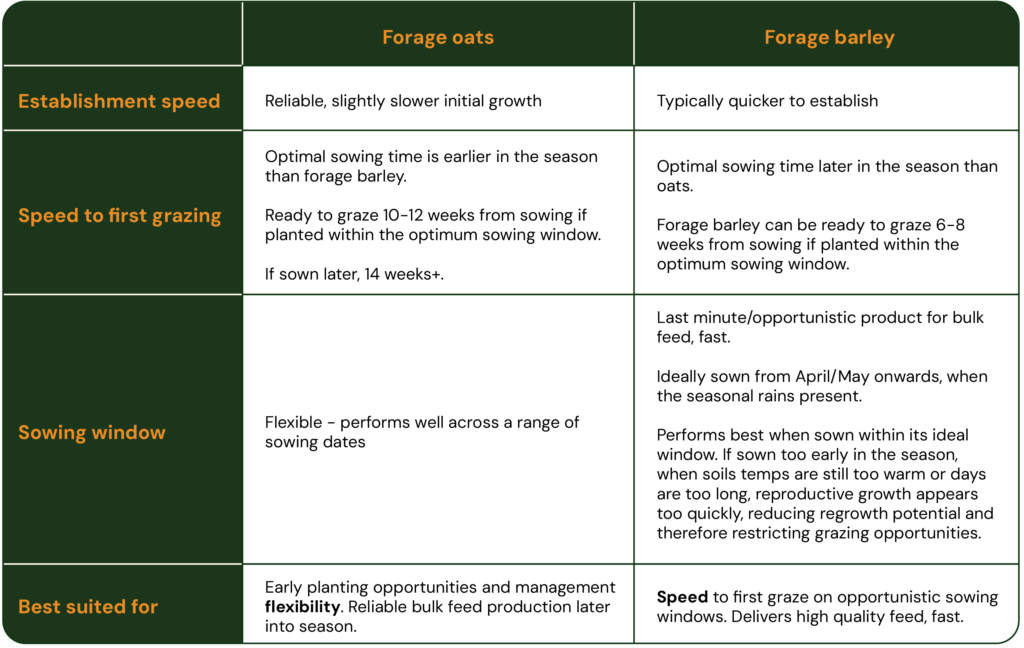
Getting feed out of the ground quickly is often the whole point of a winter forage crop. The faster you can get stock into a paddock, the more pressure you take off your perennial base during its slow-growth period. Check out the forage cereal comparison below to see how oats and barley establish.

Both crops reward good establishment practice, but they suit different points in the sowing window, and that’s actually one of the best reasons to run them together.

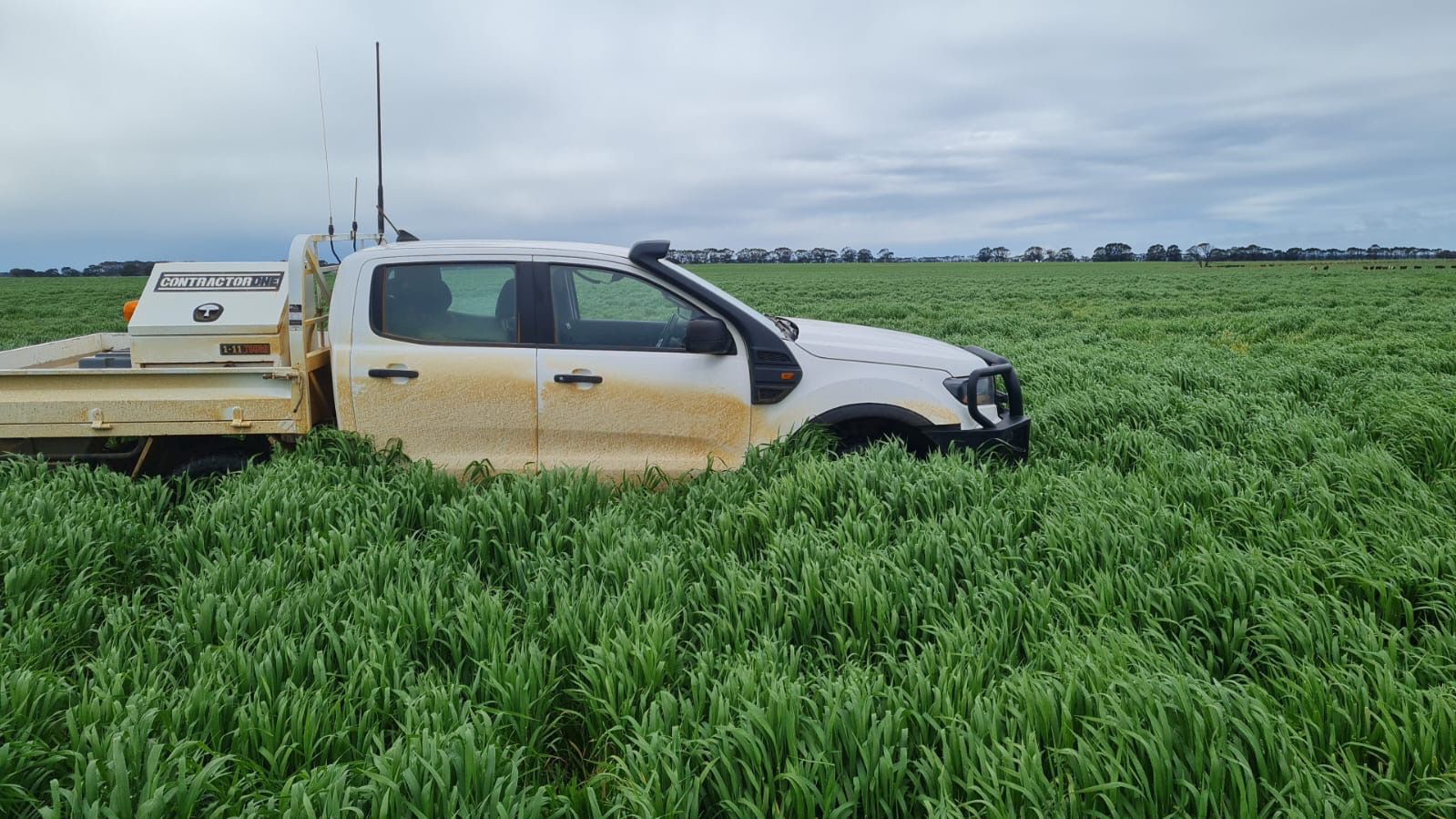
Forage barley can produce exceptional quality and quantity of feed in a short period of time when sowing conditions are right

The challenge is that the ideal barley sowing opportunity doesn’t always arrive. If a significant, later-season rainfall event follows a dry spell, barley can produce exceptional amounts of feed within as little as 6–8 weeks. But if you put all your eggs in one basket and hold off sowing anything early in the season, and the rain never comes, you may find yourself sowing oats much later than planned. At that point, it could be 14+ weeks to first graze the oats which can mean missing a large portion of the winter feed window. 

By establishing oats early as a reliable foundation and then following up with barley if the right rainfall event arrives, you remove much of that risk. If the season delivers a late break, you can still take advantage of barley’s ability to generate large quantities of feed in a short timeframe. If it doesn’t, the oats are already established and progressing towards grazing.

It’s a simple strategy that protects against seasonal uncertainty while still allowing you to capture the upside when ideal barley sowing conditions present themselves.

Rain comes at optimal time → barley is fantastic.

Wait for rain and it never comes → you’ve lost time and now your oats are late = you’ve got no winter feed.

Plant some oats early → wait for rain → rain comes, plant barley = huge amounts of high quality oats AND barley right when you need it heading into winter.


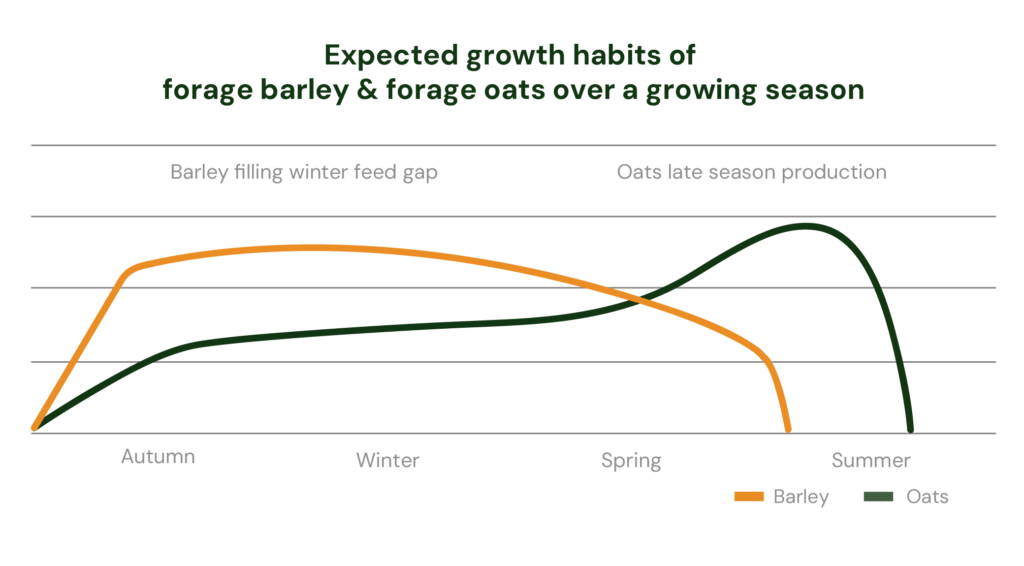
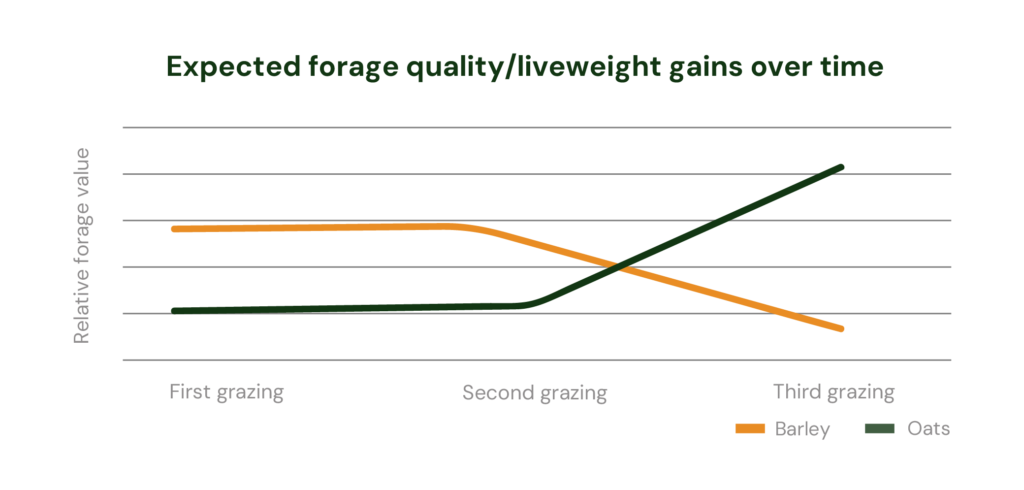
Barley quality peaks early and declines as the crop ages, so timing your grazing is critical to getting the most out of it. Oats behave differently, the quality actually improves as the crop develops, giving you a bit more flexibility on when you can graze.

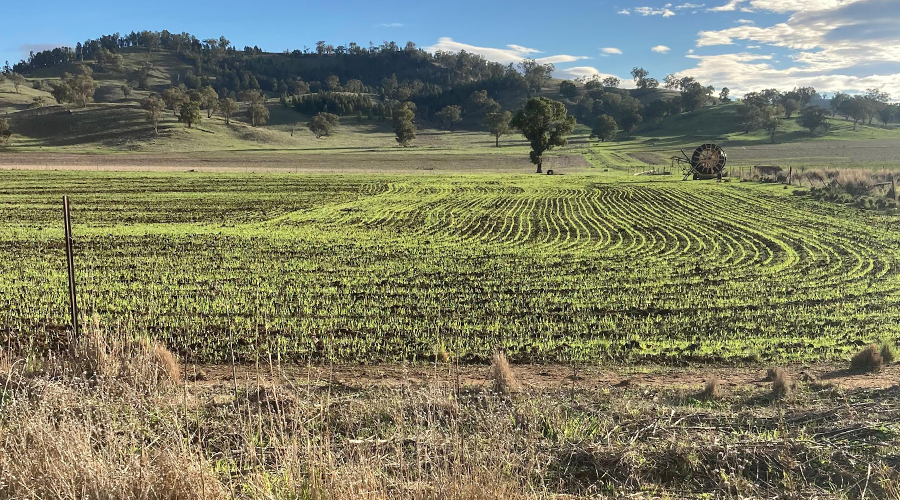
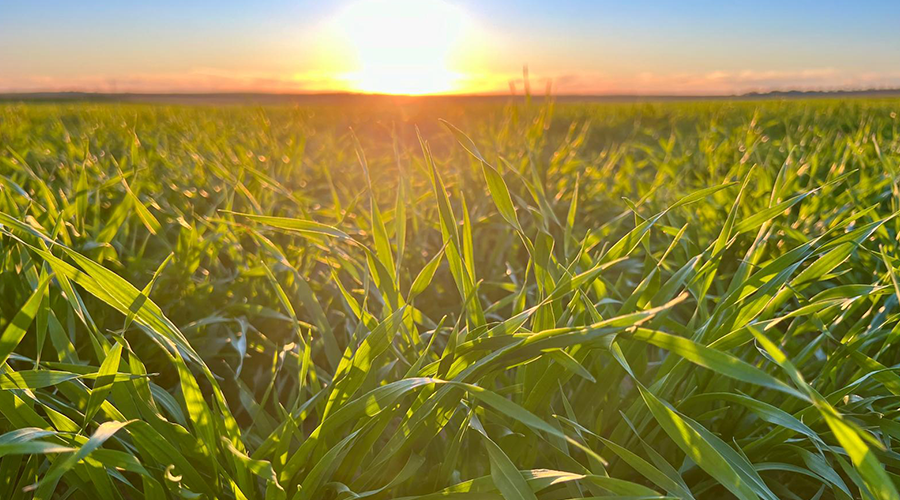
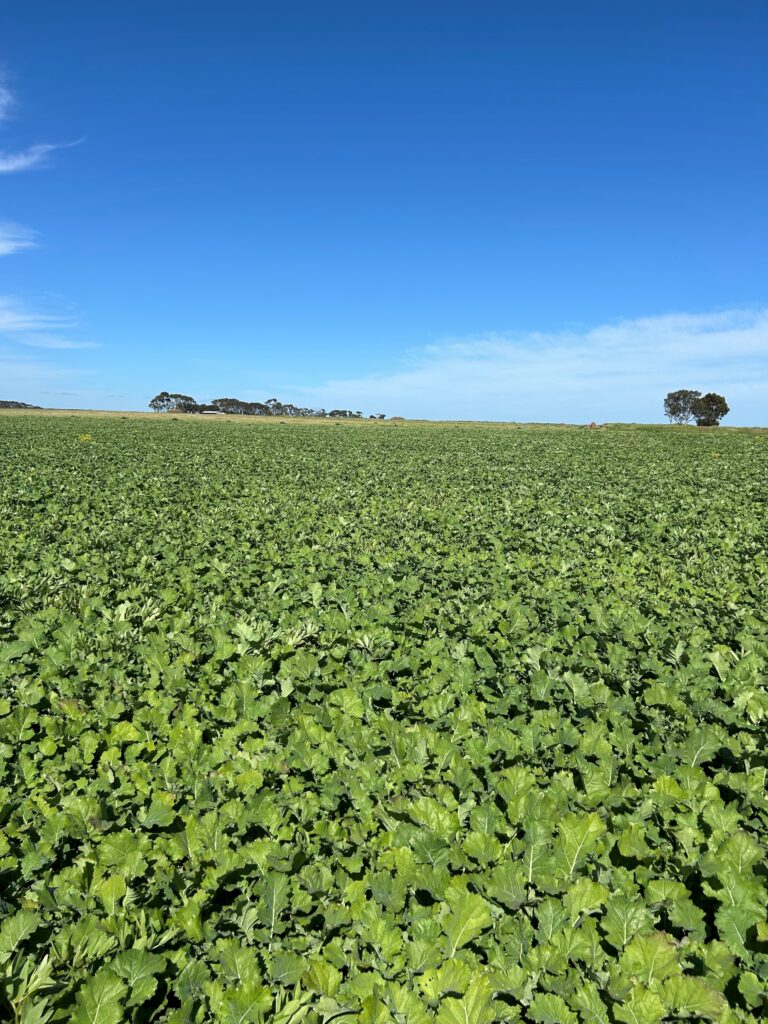
Kraken forage barley – 1 week and 3 weeks after sowing in the prime sowing window

Maximising livestock performance with the right forage

Both forage oats and forage barley can support strong livestock performance through winter, but they bring slightly different strengths to the paddock.

Forage oats:

  • Highly palatable 
  • Supports strong voluntary intake and consistent animal performance
  • Good regrowth potential, offering more flexibility across grazing rotations
  • Maintains and improves feed quality later into the season than forage barley, with late season production
  • Can also be utilised as a dry standover feed

Forage barley:

  • Excellent feed quality during vegetative growth, or before reproductive growth phase, with often slightly higher energy values than oats
  • Suits systems where bulk energy intake is a priority
  • Palatability can vary depending on variety and conditions
  • When planted in optimal planting window, it’s the quickest-to-grazing forage cereal

Whichever crop you’re grazing, management makes the difference. Avoid overgrazing, allow for adequate recovery time and monitor your crop condition as the season progresses to get the most out of what you’ve sown. 

System fit and crop selection

Choosing between forage oats and forage barley comes down to understanding what your system actually needs and when it needs it.

Forage oats are a versatile fit across a wide range of systems. They work well for grazing, hay production and mixed farming operations where flexibility is a priority. Forage barley is better suited to situations where bulk feed, high biomass or silage production is the goal. 

When it comes to making your decision, these are the factors worth working through:

  • Sowing window
  • Grazing timing
  • Feed gap requirements 

Torn between the two? An approach worth considering is running oats and barley together. This can extend your overall grazing window and give you more options if one performs better or worse than expected in a given season.

Whatever you decide, selecting varieties with a proven track record in Australian conditions is worth the attention. Reliable genetics in your forage crop, just like in your pasture species, pays off across the whole season, not just the first few weeks after sowing.

Kraken forage barley

Putting it together

Forage oats and forage barley are both solid winter feed crops for Australia, and the good news is you don’t have to pick one and forget the other. The best choice, or the best combo, comes down to your seasonal conditions, your stocking requirements and your production goals. 

A practical way to spread your risk is to run both. Get your oats in early as a reliable foundation, then follow up with barley when/if the rain arrives. If the season plays out well, you’ll end up with bulk feed from both crops at a similar time. If the rains don’t come, your oats are already in the ground and working, and you’re not facing a winter waiting on a crop that never got sown.

There’s no right or wrong answer, but there is a right answer for your farm and environmental conditions, and it starts with understanding what each crop brings to the table.

Looking to bring in forage cereals to your system this winter? AlfaGen Seeds offers a range of forage cereals and winter legumes designed to help you bridge the winter feed gap. Whether you’re chasing reliable winter feed or looking to improve soil health, there’s an option to match your system:

  • Kraken –  an early-maturing forage barley, perfect for sowing late and grazing early 
  • Bronco – late maturing forage oat with leaf rust resistance, with strong warm soil emergence, ideally suited to northern regions of Australia
  • Overland – a mid-late maturing forage oat with improved tiller production and strong winter production

If you’d like to discuss what might work best in your farm, get in touch with your local AlfaGen Seeds Territory Manager to chat through your options.

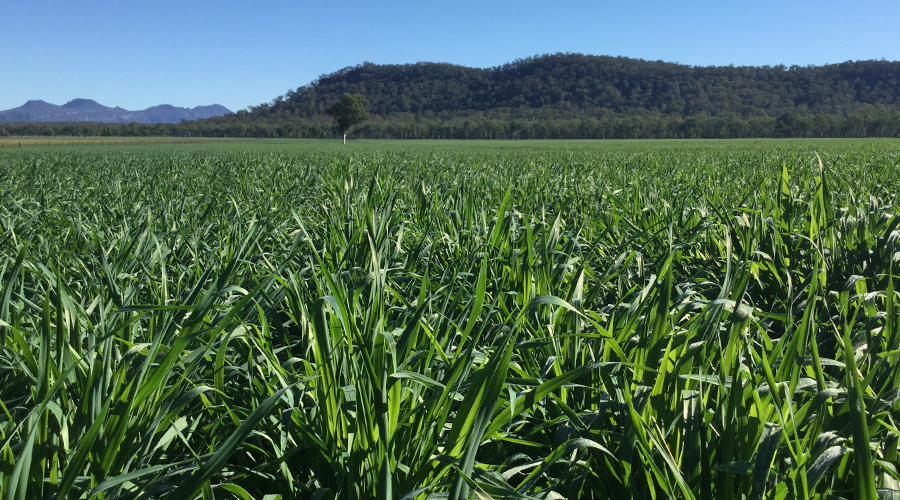
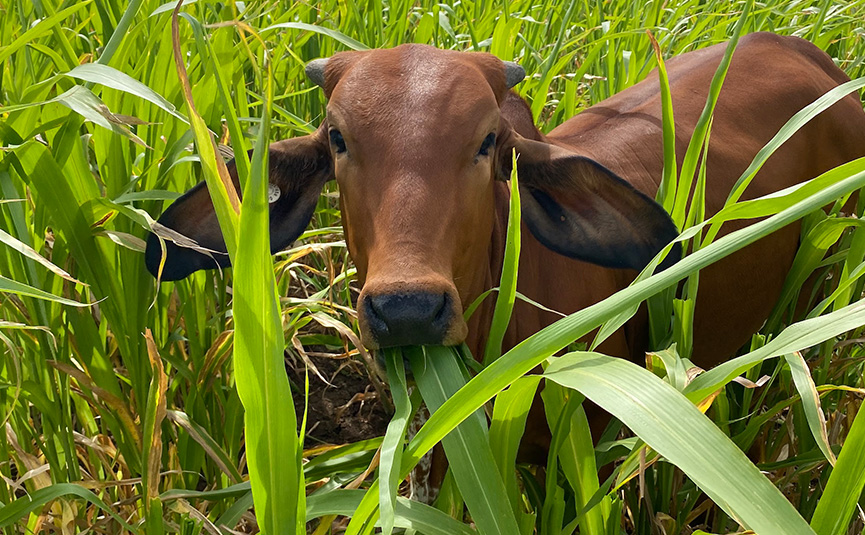
Bronco forage oats

Frequently asked questions

You might also like

Practical insights for better pastures

Get seasonal tips, agronomy advice and seed recommendations from the AlfaGen Seeds team.